

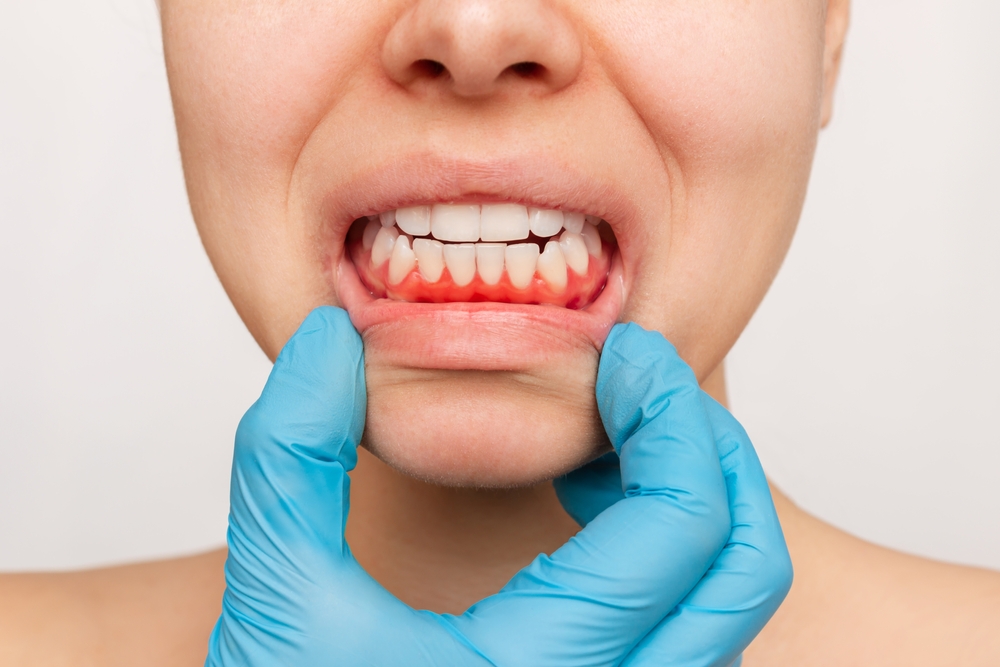
Skipping a recommended dental deep cleaning can set off lasting damage to your gums and teeth. Gum disease follows a predictable three-stage path, and only the first stage fully reverses.
Here’s what that timeline looks like, stage by stage. Knowing where you stand right now can change what happens to your smile over the next several years.
Some stages heal completely with the right care. Others cause damage that never fully goes away. The good news is that most damage is preventable with a few timely visits.
Key Takeaways
- Gingivitis is the only stage of gum disease that professional cleaning can fully reverse.
- Once pocket areas reach 4mm or deeper, brushing and flossing alone cannot fix the problem.
- Advanced gum disease is tied to heart health, blood sugar control, and long-term tooth loss.
- The window to stop this progression closes once bone loss becomes permanent.
- Common questions about deep cleanings, including cost and comfort, are answered below.
Stage 1: Gingivitis Is the Only Reversible Stage of Gum Disease
Gum disease starts with dental plaque, a soft film of bacteria that builds up on teeth every day. Left alone, plaque hardens into dental tartar and settles along the gum line, where a toothbrush can’t remove it.
Calculus build-up irritates gum tissue and feeds bacterial growth, which is what triggers the first noticeable symptoms.
Signs You’re in Stage 1
- Bleeding gums when you brush or floss
- Persistent bad breath that doesn’t clear up with brushing
- Redness or swelling along the gum line
- Mild gum inflammation without any pain
This stage is called gingivitis, and it’s the only point in the timeline where the damage fully reverses. Genetics, smoking, and certain medications can make gum tissue more sensitive to plaque and tartar. Diabetes also raises the risk of gingivitis progressing faster than expected.
How a Dentist Confirms You’re Still in This Stage
A periodontal probe is a small tool dental professionals use to measure the space between your teeth and gums. At the gingivitis stage, those measurements usually fall within a healthy range. Dental X-rays typically show no bone changes yet.
A yearly visit allows for early detection of gum disease. That keeps this stage catchable before symptoms even show up at home.
What Actually Reverses It
- A professional cleaning removes tartar that an oral hygiene routine at home can’t reach
- Consistent dental hygiene habits, including brushing and flossing, keep new plaque buildup from hardening.
According to the CDC, gingivitis is reversible with good oral hygiene and professional treatment. Once tartar is gone and gum tissue heals, bleeding stops and inflammation fades.
This window doesn’t stay open for long. Without preventative dental checkups, the infection moves deeper and crosses into a stage the body can’t undo on its own.
Stage 2: How Periodontal Pockets Form and Why Scaling and Root Planing Become Necessary
Pocket depth is the number that separates a treatable problem from permanent damage. Periodontal disease is common enough that 2 in 5 adults are affected by some form of it. Smoking is one of the strongest risk factors for it progressing further.
Here’s how a pocket forms. Untreated plaque hardens into tartar, and the resulting gum inflammation pulls gum tissue away from the tooth. This creates a gap where bacteria settle near the tooth roots and bone.
Risk Factors That Speed Up Pocket Formation
- Smoking or tobacco use
- Poorly controlled blood sugar
- Irregular dental cleanings or skipped dental visits
- A family history of gum disease
Diagnosis depends on more than a single number. Periodontitis is generally confirmed once probing depth reaches 5 mm or greater at one or more sites. Dentists also look for measurable attachment loss around the tooth.
What does a deep teeth cleaning actually do?
A deep dental cleaning, also called scaling and root planing, is the standard treatment once a dentist confirms periodontitis. It isn’t a more thorough version of a routine teeth cleaning. It’s a different procedure that cleans below the gum line instead of above it.
Dental hygienists use a dental scaler, an ultrasonic tool, or an ultrasonic device. These tools vibrate at high frequency to break apart tartar and clean the root surface inside each of the gum pockets so tissue can reattach to the tooth.
What to Expect During and After Treatment
- A local anesthetic numbs the treatment area in the dental office.
- The hygienist performs periodontal deep cleaning on one side of the mouth per visit.
- Mild swelling or tenderness is normal for one to two weeks afterward.
- A follow-up exam checks whether pocket depth has improved.
At 4mm or deeper, better brushing alone won’t solve the problem. Left untreated, pockets deepen, gum recession follows, and tooth sensitivity increases. Periodontal scaling and gum scaling stop a progression that home care alone can’t.
Stage 3: Bone Loss, Tooth Loss, and Systemic Health Issues Take Hold
By Stage 3, bone loss has moved into the jaw’s supporting structure. Reversing that damage often requires dental bone grafting as part of treatment. Tooth loss here isn’t a sudden event; it’s the result of bone that has broken down over months or years.
Stage III vs. Stage IV: What Changes
Stage I is the mildest form, and Stage II is moderate but still treatable. Stage III involves advanced attachment loss. Bone and connective fibers break down enough that tooth loss becomes a real risk.
Stage IV means the patient has already lost teeth. Rehabilitation at that point often centers on surgically guided implants to restore function.
How Gum Disease Affects Your Whole Body
Advanced periodontal disease reaches beyond the mouth. Research from the University at Buffalo, funded by the National Institutes of Health, points to a possible explanation. Bacteria enter the bloodstream via small ulcers that develop in infected gum tissue. This is one proposed link to cardiovascular disease.
Diabetes and gum disease affect each other in both directions, too. The CDC notes an association between diabetes and periodontal disease, which is itself a leading cause of tooth loss.
Protecting Your Gum Health Going Forward
- Keep up with periodontal maintenance visits every three to four months after treatment.
- Ask your dental professional about an antimicrobial rinse or a saliva rinse if plaque buildup is a recurring problem.
- Follow your dentist’s homecare instructions closely between appointments.
- Prioritize cavity prevention and periodontal health as part of routine dental visits, not just when something hurts.
Staying consistent with these habits is what keeps Stage III from developing in the first place.
Time to Schedule That Dental Deep Cleaning You’ve Been Putting Off
A dental deep cleaning is often the only thing that stops early gum disease from turning into a lasting problem. Gingivitis responds quickly to professional care, but periodontitis does not reverse on its own.
The stage you’re in right now determines what happens next. Catching the disease early keeps your options simple, and waiting narrows them. Most patients who commit to routine dental cleanings and good oral hygiene never reach the later stages at all.
At Truly Yours Family Dental, Dr. Le & Dr. Nguyen can tell you exactly which stage you’re in and what it takes to get back to healthy gums. Contact our practice to find a time that works for you.
FAQs
Is a dental deep cleaning ever really necessary?
Yes, when a dentist recommends one, it’s because an exam has already confirmed an active infection below the gum line. Many dental insurance plans cover a portion of the cost, since the procedure treats disease rather than appearance. Skipping it usually means paying more later for more involved treatment. Think of it as the more affordable option, not the harder one.
Does a deep dental cleaning hurt?
Most patients tolerate it well with local anesthetic, and any soreness afterward is usually mild. Dentists often recommend rinsing with warm salt water and sticking to softer foods for a day or two. Over-the-counter pain relief is rarely needed beyond that. Most people are back to normal eating within 48 hours.
How long does a dental deep cleaning take?
Appointments usually run 45 minutes to an hour per side of the mouth, often split across two visits. After treatment, your dentist will likely schedule a follow-up in a few weeks to check healing. From there, many patients move to maintenance cleanings every three to four months instead of the usual twice-a-year schedule. That closer monitoring helps catch any return of the infection early.
What is the difference between a regular cleaning and a deep cleaning?
Beyond where each one cleans, the two also differ in how often you’ll need them and how insurance treats them. A regular cleaning is typically covered fully and done twice a year for maintenance. A deep cleaning is billed as a treatment procedure, done once when pockets are diagnosed, and may need periodic touch-ups afterward depending on how your gums respond.
How do I know if I need a deep cleaning?
You often can’t tell on your own, since periodontitis rarely causes obvious pain until it’s advanced. That’s why routine exams matter even if your mouth feels fine. Some people are simply more prone to it due to family history or how their body responds to plaque. A dentist is the only reliable way to catch it before you’d notice anything yourself.
Sources
- https://www.cdc.gov/oral-health/data-research/facts-stats/fast-facts-gum-disease.html
- https://www.nidcr.nih.gov/research/data-statistics/periodontal-disease/adults
- https://www.buffalo.edu/news/releases/1997/10/3204.html
- https://www.cdc.gov/oral-health/data-research/facts-stats/fast-facts-diabetes-and-oral-health.html