

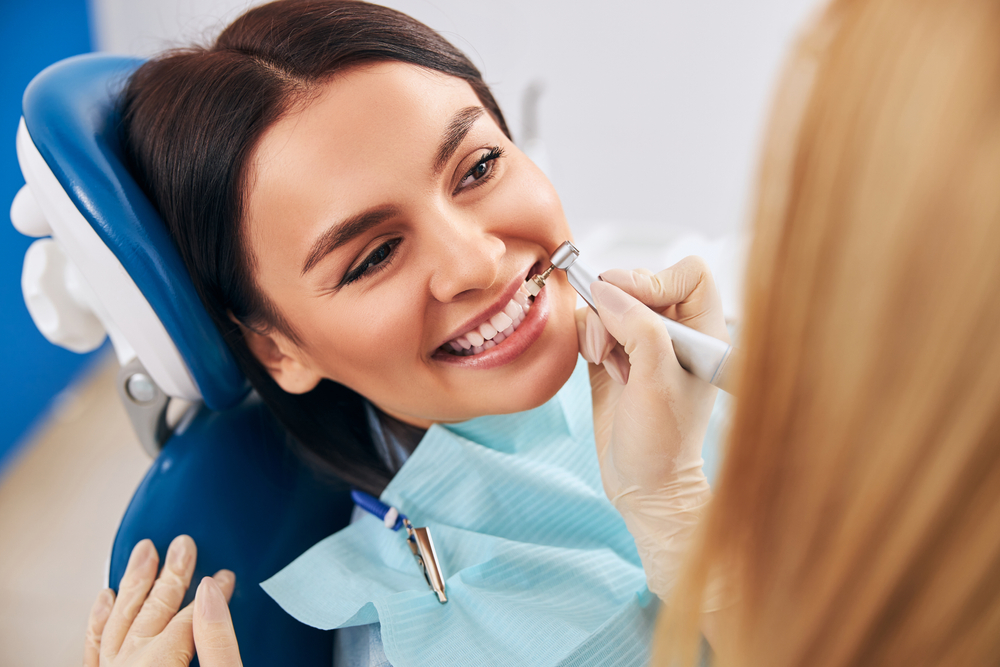
Brown stains on teeth that won’t budge after scrubbing and trying every whitening product usually aren’t your fault. It’s where the stain is sitting. Stains on the outer enamel surface respond well to cleaning and OTC whitening. Stains that formed inside the tooth, beneath the enamel, don’t. Here’s why that distinction matters, and what you can actually do about it.
Key Takeaways
- Extrinsic stains sit on the enamel surface and respond to cleaning and whitening.
- Intrinsic stains form inside the dentin, where over-the-counter products cannot reach.
- Professional in-office bleaching uses high-concentration peroxide to treat stains inside the dentin.
- Enamel microabrasion physically removes a thin layer of stained enamel instead of bleaching it.
- Good oral hygiene and regular dental checkups keep new staining from forming after treatment.
What causes tooth discoloration? Extrinsic Staining vs. Something Deeper
Tooth discoloration generally falls into what dentists classify as extrinsic, intrinsic, or a combination of both. That classification determines how it gets treated. Extrinsic staining sits on the outer tooth surface. Intrinsic staining forms inside the tooth, within the dentin layer beneath the tooth enamel.
Common Causes of Extrinsic Staining
Extrinsic stains are the most common type people notice, and they form from dental plaque, dietary habits, and lifestyle choices. Common causes include:
- Plaque buildup and tartar buildup that create a film on enamel
- Red wine, coffee, and tea, which are frequent contributors to yellow stains
- Tobacco consumption, which leaves some of the most stubborn deposits
- Frequent snacking on dark berries, sauces, or other pigmented foods
- Poor oral hygiene, which allows dental plaque to sit longer on the enamel
Light surface stains respond to professional cleaning and over-the-counter whitening treatments. Those products can physically reach and break down the stain.
Common Causes of Intrinsic Staining
Intrinsic staining works differently, since enamel sits on top of the dentin where the actual color forms. Brushing cannot reach it, and neither can whitening strips. Several factors can cause this type of staining:
- Genetic factors that influence natural tooth color and dentin development
- Reduced saliva flow, which lets acids act on enamel longer and changes tooth color
- Enamel erosion, which thins the outer layer and makes darker dentin more visible
- Dental trauma or injury to a tooth during childhood or adulthood
- Certain nutritional gaps, including vitamin A, during tooth development
- Excess fluoride exposure in childhood, which can cause fluorosis and tooth mottling
Some patients are simply born with a higher likelihood of intrinsic staining. That’s because genetic defects that affect the tooth enamel can change its thickness and color from the very start.
None of these causes reflect anything a person did wrong. Intrinsic staining is often the result of biology, medication history, or the natural aging process rather than a hygiene issue.
Wait, could that brown spot actually be a cavity?
Brown spots do not always mean staining. Sometimes they signal an oral health issue, like tooth decay or primary caries. That needs attention before any cosmetic dental treatment. Catching a cavity early usually means a simpler, more affordable dental treatment down the road.
A few signs of cavity formation are worth watching for:
- A dark or brown spot that seems to be growing over time
- A rough or pitted texture where the spot sits
- Sensitive teeth when eating something hot, cold, or sweet
- Visible dental cavities near the gumline or between teeth
Tooth decay can appear as a brown or dark spot on the tooth. The good news is that cavities are still treatable when caught early. Gum disease changes the environment around the tooth root and can affect color near the gumline.
A dentist can tell the difference between a stain and decay through an exam. Waiting to see if a dark spot fades on its own is rarely the safest choice.
Treatment One: Professional In-Office Bleaching
Intrinsic stains resist home whitening treatments because of simple physics. Over-the-counter formulations cannot reach the dentin. Professional-strength peroxide diffuses easily through interprismatic spaces in the enamel to reach the stain underneath. This is often the most requested option because it produces visible results in a single visit.
How In-Office Bleaching Works
In-office bleaching uses a peroxide concentration far stronger than anything sold at a pharmacy. A dental professional applies this gel directly to the teeth under controlled conditions as part of professional whitening. Most patients describe the process as comfortable, with the biggest adjustment being the taste of the whitening gel.
The peroxide concentrations used in-office are strong enough to pass through enamel and reach the dentin layer. Over-the-counter formulations can’t do the same. A dentist can also monitor sensitive teeth throughout the appointment and adjust the treatment as needed.
What This Treatment Can Address
Professional whitening is typically used for:
- White spots caused by fluorosis
- Discoloration linked to natural aging
- Staining that developed after past dental trauma
- Yellow stains that have deepened over years of buildup
Results vary depending on how deep the original staining sits and how the tooth responds to treatment.
Treatment Two: Enamel Microabrasion
Bleaching does not fix every case. When it falls short, microabrasion takes a different route, removing the stained enamel layer instead of bleaching through it. Many patients choose this dental treatment specifically because it does not involve any bleaching chemicals at all.
How Enamel Microabrasion Works
A dental professional applies an abrasive slurry to the tooth. They work the surface in a controlled way to reduce the outer enamel where the discoloration sits. This procedure requires professional care. You can’t do it at home. The treatment typically takes place in a single office visit and requires no downtime afterward.
Stain depth determines which treatment fits. Deeper, opaque defects sometimes require a restorative approach instead of responding to microabrasion alone. Shallow discoloration, on the other hand, often clears with microabrasion by itself.
Why the Exam Comes First
Looking at a stain from the outside does not reveal how deep it runs. That is why an exam matters before either treatment starts. ADA guidance on single-tooth discoloration explains that clinical and radiographic examination is imperative to selecting the right treatment path. A dental professional needs to see beneath the surface before recommending either option.
Combining both treatments in the right order often produces a more even, natural-looking result than either one alone.
Oral Hygiene Practices and Dental Care After Professional Treatment
Professional treatment removes existing staining, but what happens afterward determines how long the results last. This is the stage where daily habits matter most, since they decide whether staining returns or stays away for years.
Daily Habits That Protect Your Results
Home oral hygiene practices are the first line of defense against new dental discolorations. A solid oral care routine includes:
- Brushing twice daily with a soft-bristled brush and fluoride toothpaste
- Flossing once daily to clear debris from between teeth
- Rinsing with water after red wine, coffee, or tea
- Cutting back on tobacco consumption, one of the largest sources of recurring extrinsic staining
- Avoiding improper brushing technique, such as scrubbing too hard or skipping the gumline
Improper brushing wears down enamel over time and can even lead to sensitive teeth. A soft-bristled brush is gentler on enamel, especially right after a whitening treatment. Elevated fluoride levels in toothpaste and drinking water also play a supporting role by strengthening enamel against future dental cavities.
The Role of Professional Cleanings and Checkups
Dental checkups play a role too, even for patients who brush and floss consistently at home. The CDC recommends having at least a yearly dental check-up and professional cleanings. This helps catch new staining and oral health issues early.
Professional teeth cleaning removes tartar buildup that forms even with consistent home brushing. Once tartar hardens, it cannot come off without professional tools, and it picks up stain just like enamel does. Letting it accumulate reverses cosmetic progress faster than most people expect.
Home dental hygiene and professional dental visits work together, and neither replaces the other. A brown stain that resists home products is not necessarily worse than one that responds to them. It simply sits somewhere home products cannot physically reach. Dental care at home protects the results once a dental professional has addressed the underlying stain.
Don’t Let Brown Stains On Teeth Win. Book Today!
Treating brown stains on teeth successfully comes down to matching the right procedure to the right depth of discoloration. It’s rarely about guessing from how the stain looks on the surface. Professional in-office bleaching and enamel microabrasion solve different problems. Many patients actually benefit from both, used together or in sequence.
Good oral hygiene afterward is what protects that investment long-term. Even professionally treated teeth can pick up new stains without consistent care. The most useful takeaway today isn’t a home remedy. It’s a clear diagnosis, and that only comes from an actual exam.
If you’re ready to find out which treatment fits your stains, the team at Truly Yours Family Dental is here to help. Dr. Le & Dr. Nguyen can walk you through your options in a single visit, with no guesswork involved. Reach out to us!
FAQs
How to get rid of brown stains on teeth?
The right fix depends on where the stain sits, but you don’t need to diagnose it yourself. During a consultation, your dentist checks tooth color, reviews your medical and dental history, and sometimes takes an X-ray before recommending in-office bleaching, enamel microabrasion, or a combination of both. Treatment timelines and costs vary by case, so ask for a personalized estimate at your visit.
What causes brown stains on teeth?
Brown stains usually trace back to either surface exposure, like coffee, wine, or tobacco, or internal changes within the dentin, like aging or past trauma. Many patients have both types layered together, which is why staining can look different from one tooth to the next. Genetics also play a role, since some people naturally have thinner enamel that shows discoloration more easily than others.
Are brown stains on teeth cavities?
Not every brown spot is a cavity, but ignoring one is a gamble. Untreated decay can spread deeper into the tooth over months, turning a small filling into a larger, costlier procedure like a crown or root canal. A same-day exam usually settles the question, and catching decay early keeps treatment simple and affordable. When in doubt, it’s worth getting checked rather than waiting.
Are brown stains on teeth permanent?
Nothing about a brown stain has to be permanent, but results do need upkeep. In-office bleaching can fade again if old habits like smoking or drinking dark beverages continue unchecked. Microabrasion results are generally stable since the discoloration was physically removed rather than masked. Most patients extend their results for years with routine cleanings and mindful daily habits.
Can mouthwash cause brown stains on teeth?
Yes, and it catches many patients off guard. Chlorhexidine mouthwash, often prescribed short-term for gum disease, is well known for causing brown staining on teeth and the tongue with regular use. The staining sits on the surface, so it typically responds well to a professional cleaning once the mouthwash is stopped. If you’re using a prescription rinse long-term, ask your dentist about rotating in a gentler alternative.